
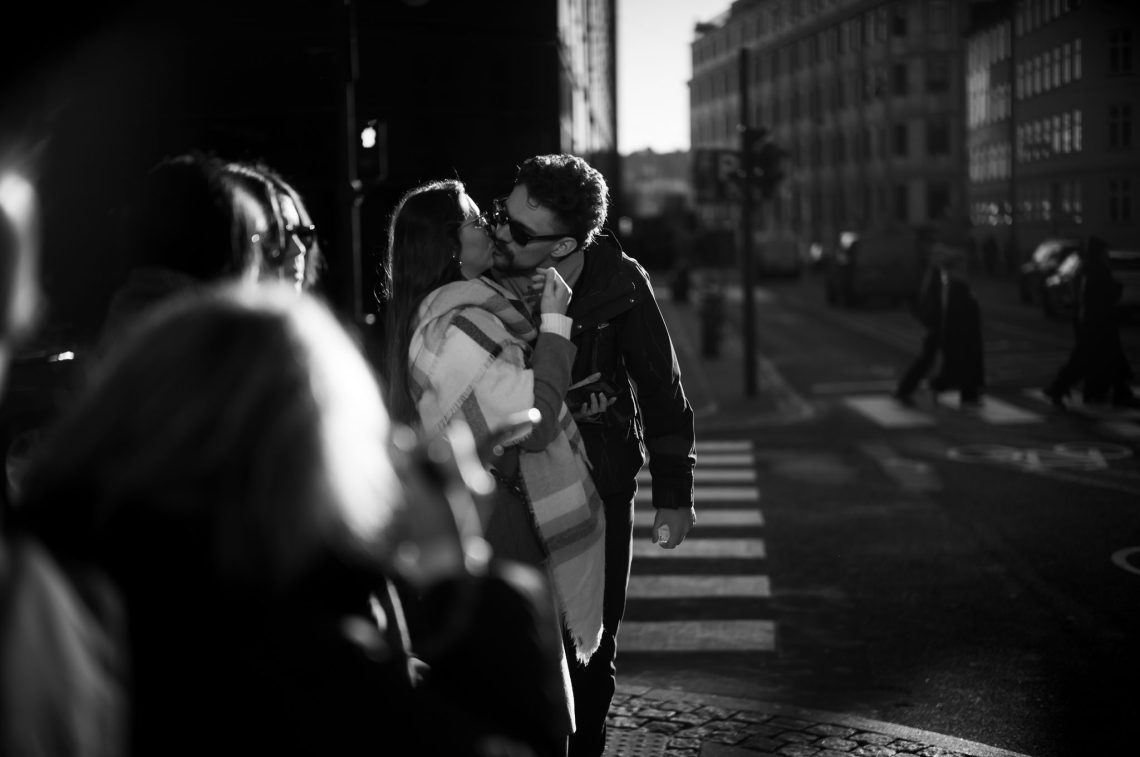
Not Shy — Discreet: Photographing As If I Weren’t There
The misunderstanding
When someone said, “I get the feeling you’re a bit shy about photographing strangers,” I understood the reaction.
Discreet photography can look like hesitation.
But in my case, it isn’t about hesitation at all — it’s about intention. Full intention.
I work as a photojournalist. I have no issue being seen. I can walk into a crowded concert hall, step forward, take space, and photograph openly. That’s part of the job — being present, visible, and sometimes unavoidable.
So the question isn’t whether I can be seen.
The question is why, in the street, I often choose not to be.
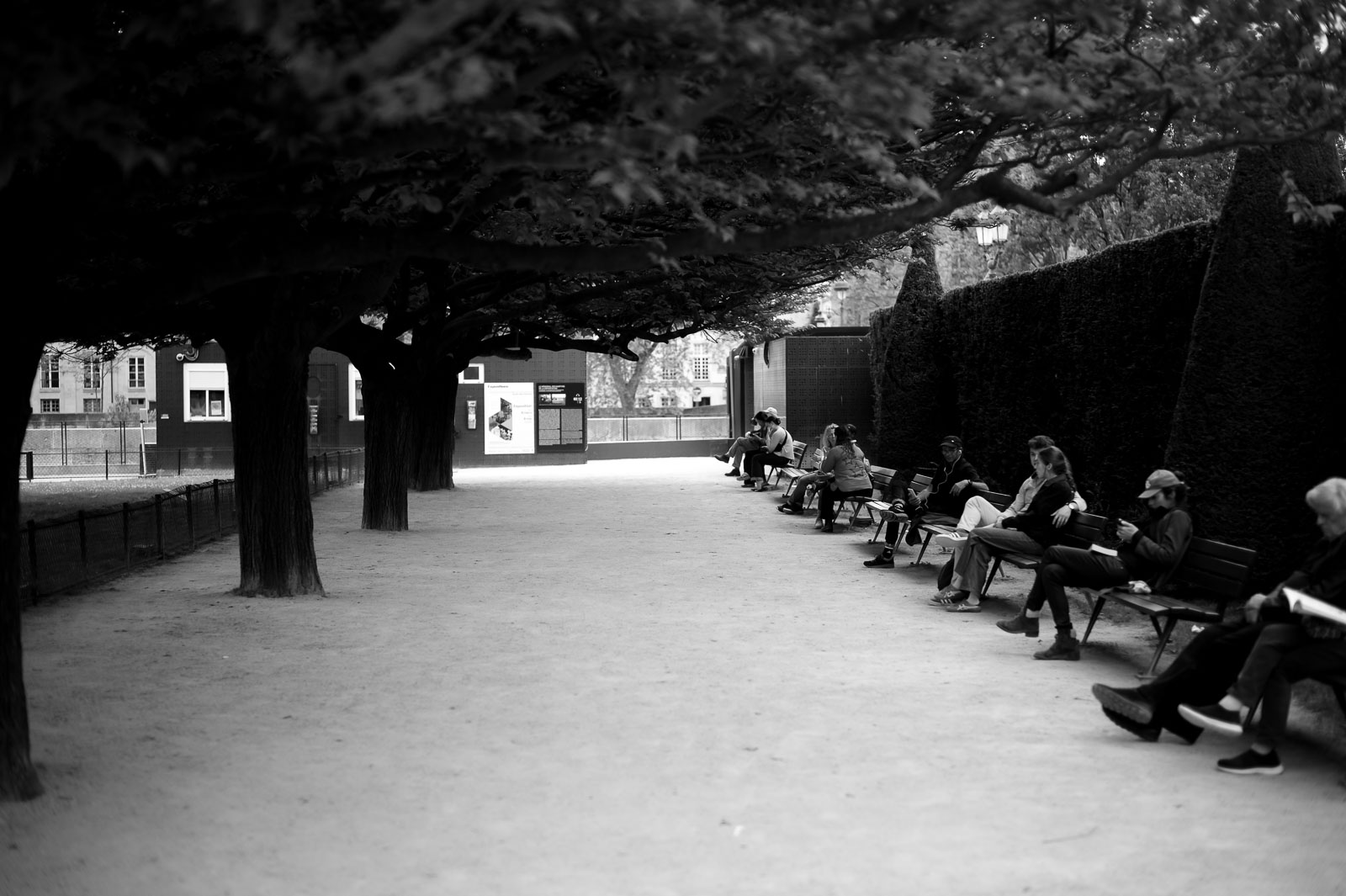
One of the things we practise in my workshops is to capture photos unnoticed.
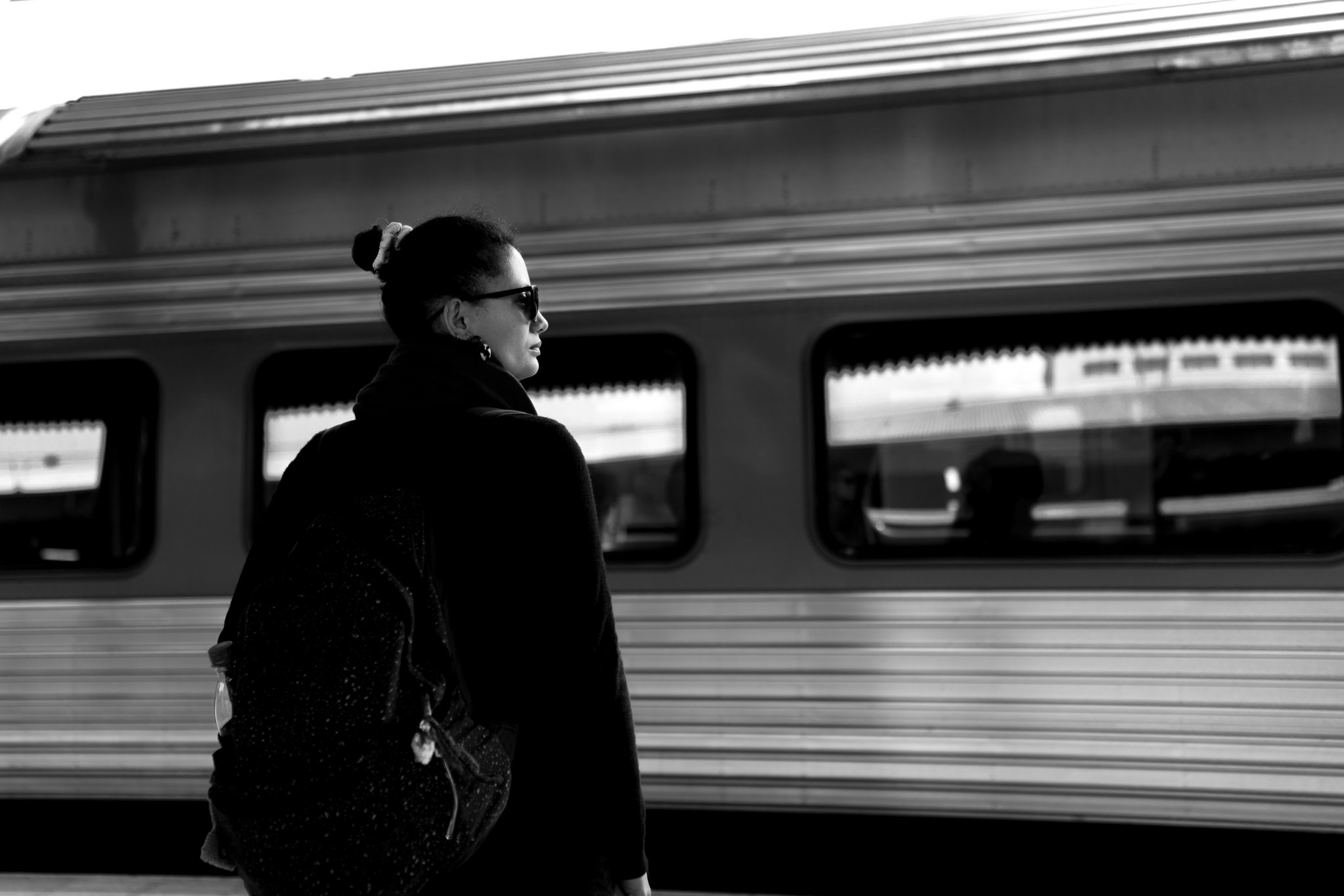
A matter of intent, not courage
Street photography offers different visual languages, each requiring a different kind of presence.
In my street work, I’m not trying to provoke a moment — I’m trying to preserve one.
That means working as if I weren’t there.
I want the scene to remain intact. People should continue their gestures, their conversations, their thoughts — without being altered by my presence. The photograph should feel discovered, not triggered.
This is very much in line with Cartier-Bresson: the decisive moment is not forced. It is recognised.
Two temperaments in street photography
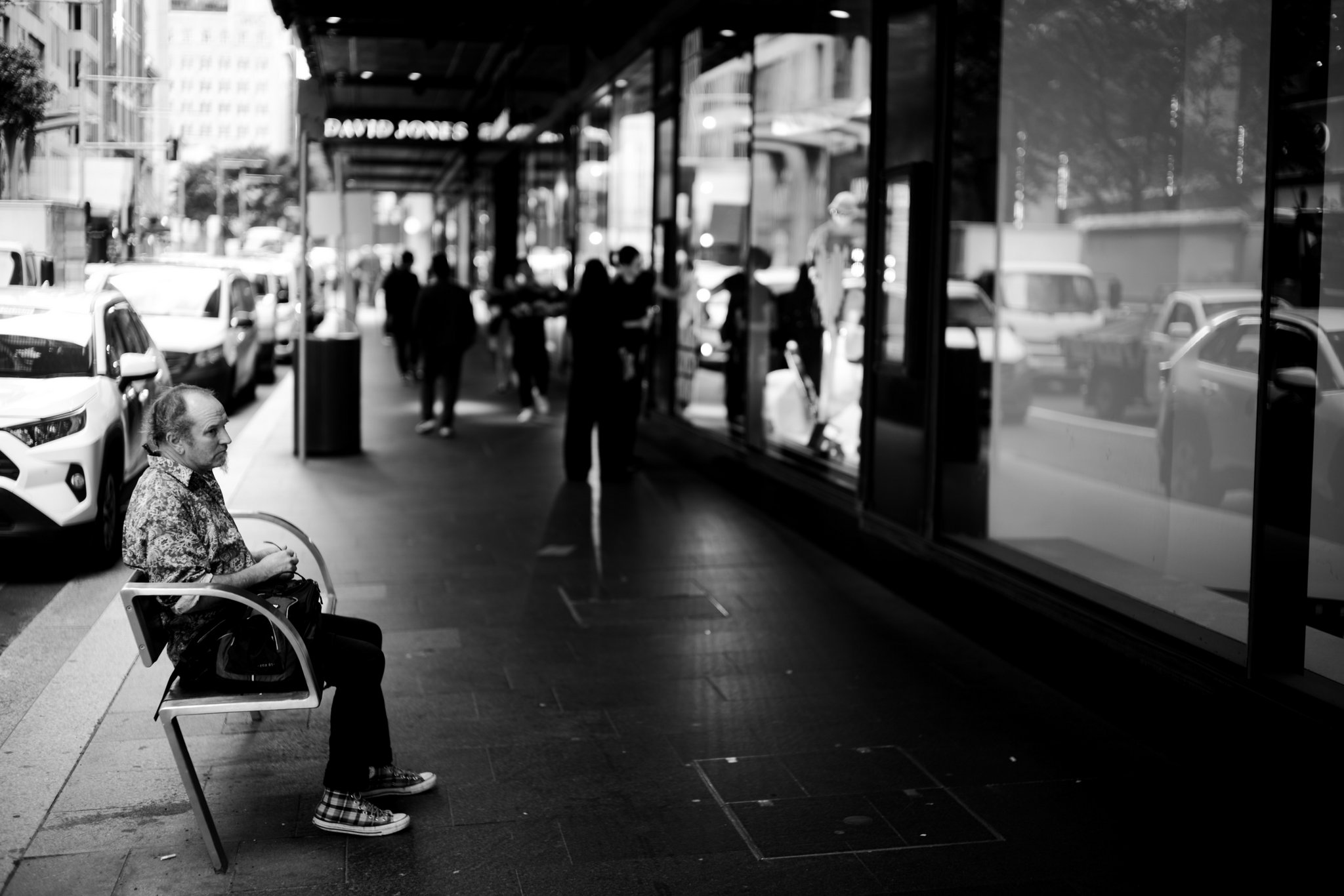
1. Observational/discreet
(As if not there)
- Aim: preserve the scene
- Method: patience, anticipation, minimal presence
- Result: images that feel naturally occurring
Photographers:
- Henri Cartier-Bresson
- Vivian Maier
- Saul Leiter
- Garry Winogrand
- Josef Koudelka
Success here is often invisible: nothing reacts because nothing was disturbed.
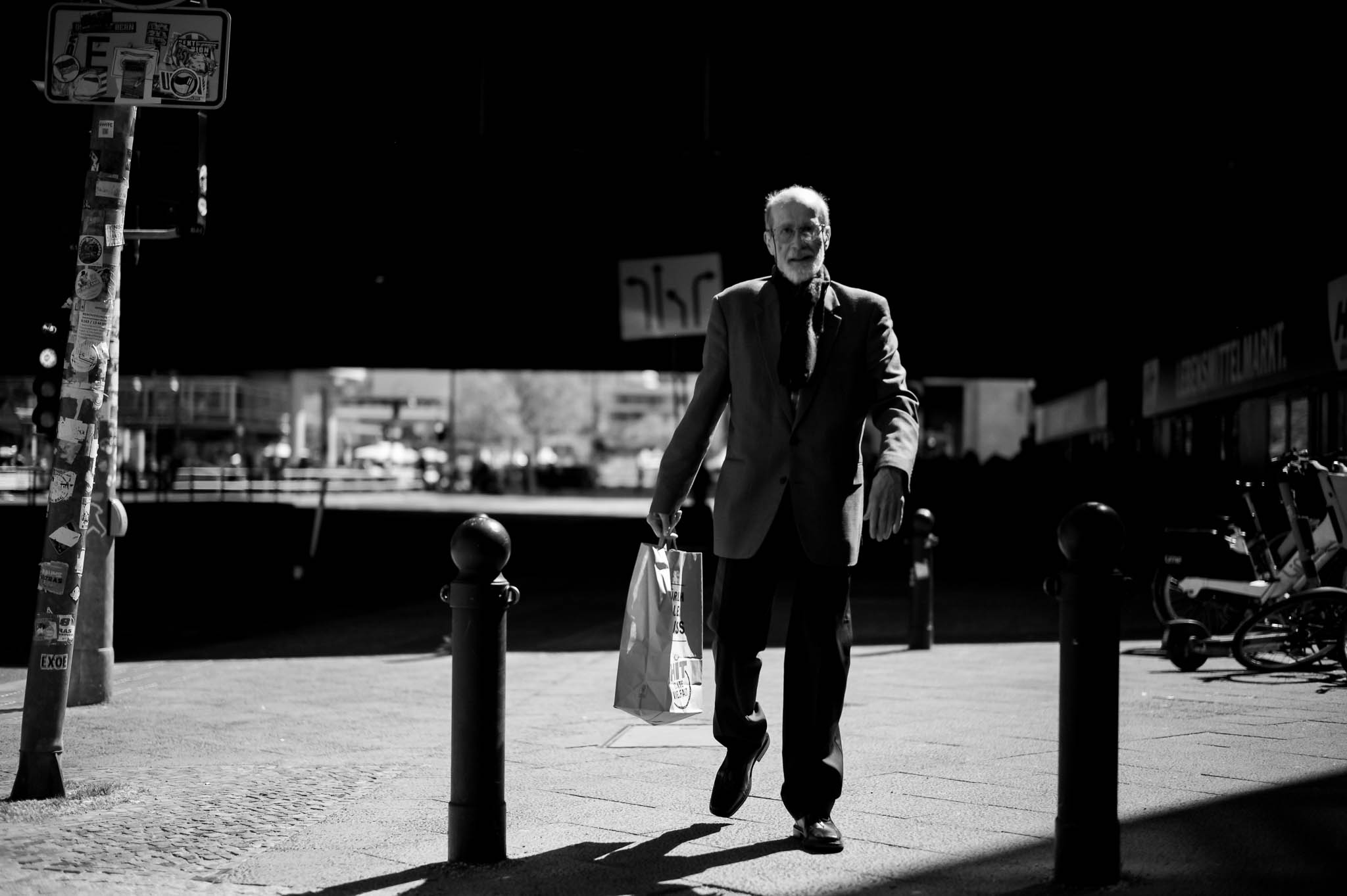
2. Interventionist/performative
(Presence as part of the image)
- Aim: provoke, engage, disrupt
- Method: closeness, flash, confrontation
- Result: images charged by the encounter
Photographers:
- Bruce Gilden
- Weegee
- Martin Parr
Here, the photographer’s presence is not hidden — it’s a driving force.
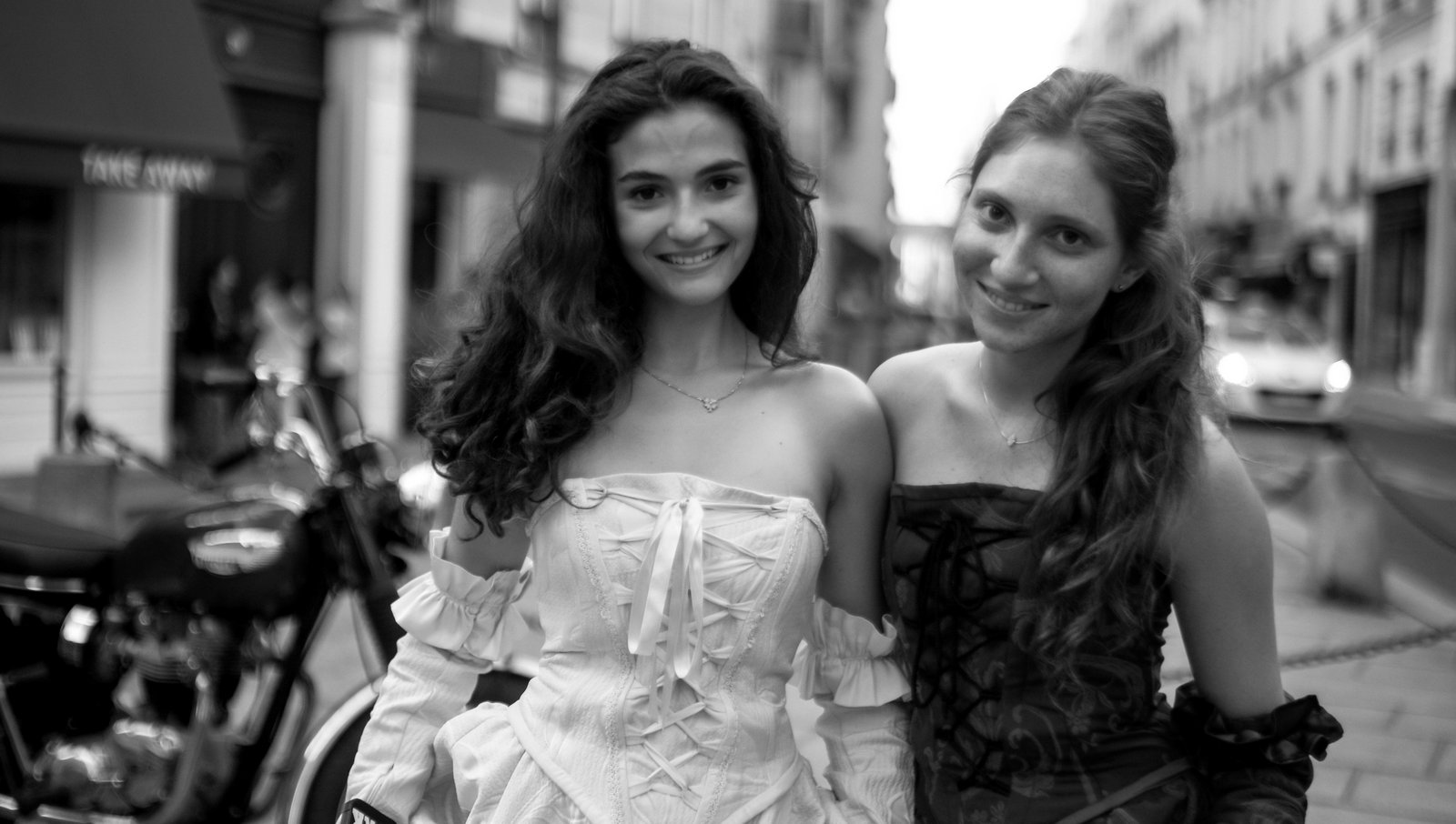
A third path: constructed reality
- Philip-Lorca diCorcia
- Jeff Wall
- Editorial/fashion street work
In these cases, interference is not avoided — it’s integral.
The real variable: influence
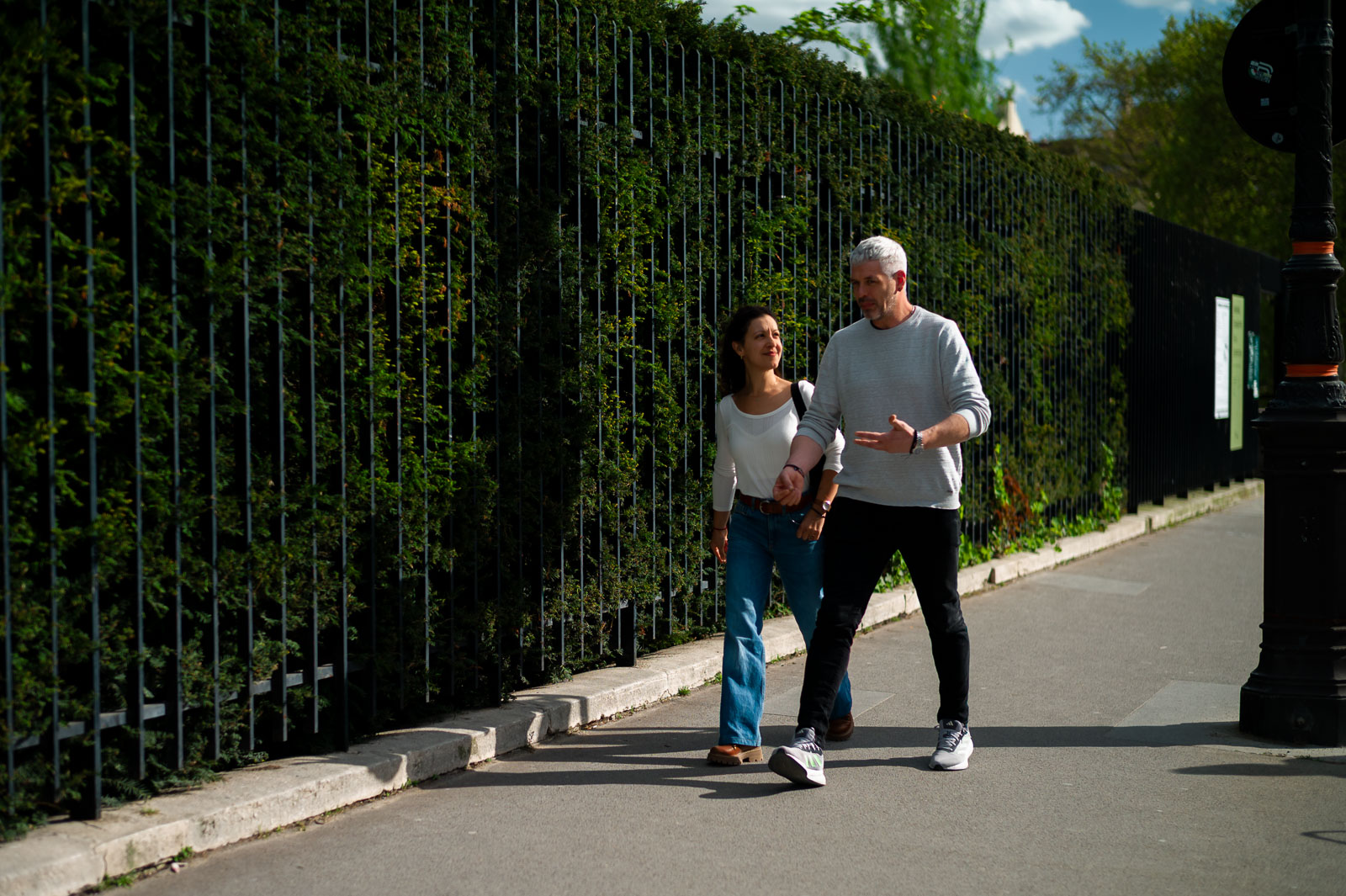
At the core, this comes down to how much the photographer influences what unfolds.
Discreet work minimises that influence.
Interventionist work embraces it.
Neither is inherently right or wrong — but they lead to different truths in the image.
Why discretion can be misread as shyness
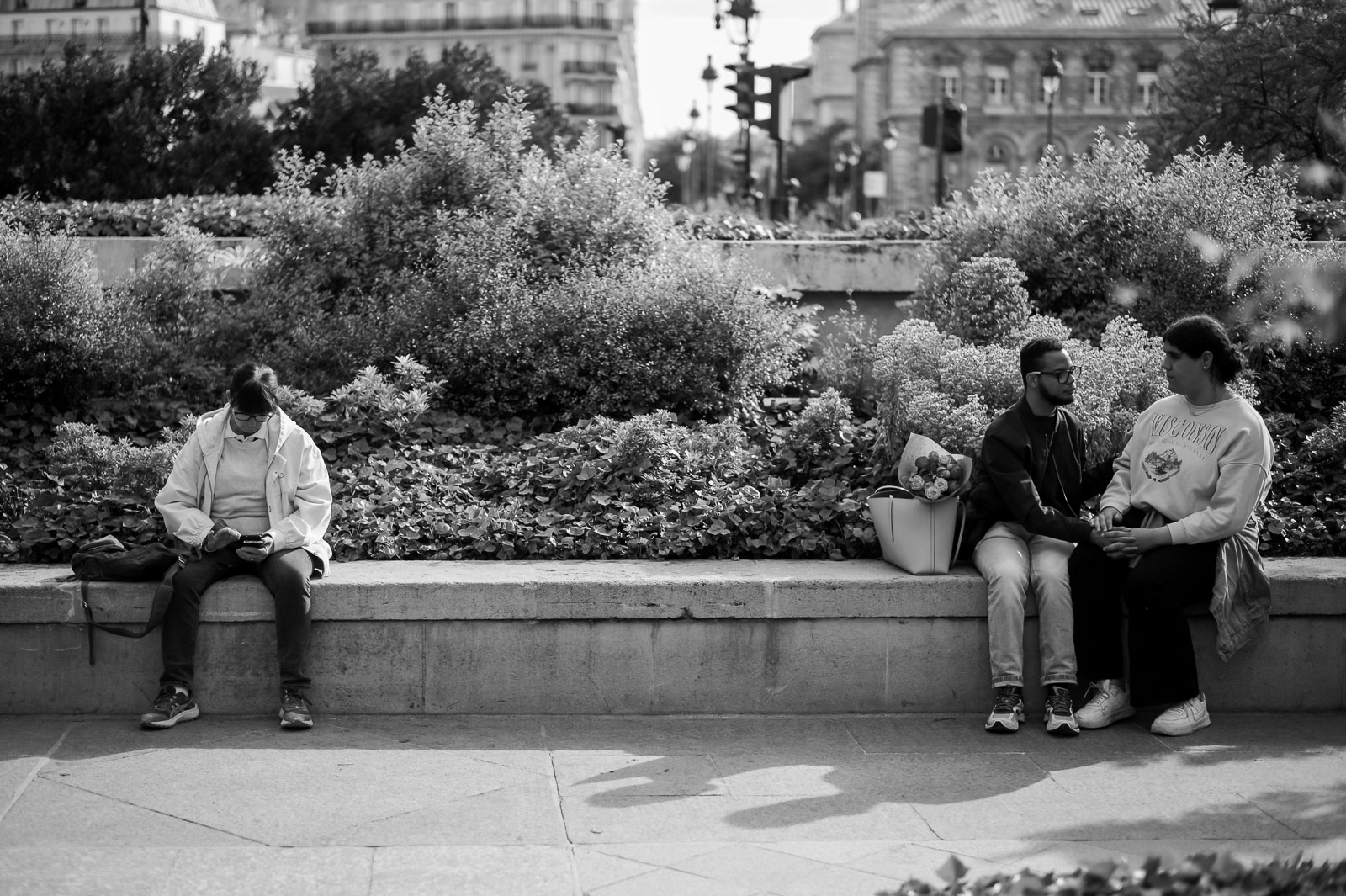
Because it’s quiet.
If no one reacts, the photographer disappears from the image — and with that, any visible sign of boldness.
Meanwhile, confrontation leaves traces: eye contact, tension, reaction.
But restraint can also be a form of confidence — choosing not to impose yourself on the scene.
How I teach this
This approach isn’t just personal — it’s something I actively teach in my workshops.
Not as a rule, but as a way of seeing.
We work on:
- reducing physical and visual footprint
- letting scenes develop rather than chasing them
- recognising when presence would alter the moment
- understanding that timing includes when not to shoot
The goal isn’t to make participants invisible as a trick.
It’s to help them experience what happens when you stop forcing images and start receiving them.
For many, this is a shift: from “taking” photographs to allowing them.
My way of working
In the street, I lean toward:
- observing rather than interrupting
- waiting rather than chasing
- receiving rather than taking
I’m after a specific quality: A photograph that feels like it happened without me.
I’m not trying to disappear because I’m unsure.
I’m trying to disappear because the photograph demands it.
And it’s something I believe in strongly enough to both practice — and teach. Join a workshop and learn how to do it in real life.
Sometimes, the most powerful thing a photographer can do… is step back, and let the world remain itself.
Share this:

Discover more from Morten Albek Photo Workshops
Subscribe to get the latest posts sent to your email.

