

Vignetting: From Optical Imperfection to Artistic Tool
First of all, let’s clarify what vignetting is. Vignetting is the gradual darkening of an image toward its corners compared to the centre.
While often considered a flaw in lens design, it has evolved into a stylistic choice that photographers embrace for its ability to guide the viewer’s eye and create mood. Some see this as a feature that reminds them of the past, others as a fault.
The Science Behind Vignetting
Vignetting occurs because light entering a lens at oblique angles loses intensity before reaching the sensor or film. This phenomenon is explained by the cosine-fourth law, which states that illumination decreases proportionally to the fourth power of the cosine of the angle of incidence.
Types of Vignetting:
- Optical Vignetting: Caused by lens design and aperture shape. Common in fast primes and wide-angle lenses.
- Mechanical Vignetting: Occurs when accessories like hoods or filters block light.
- Natural Vignetting: An unavoidable effect of geometry and physics.
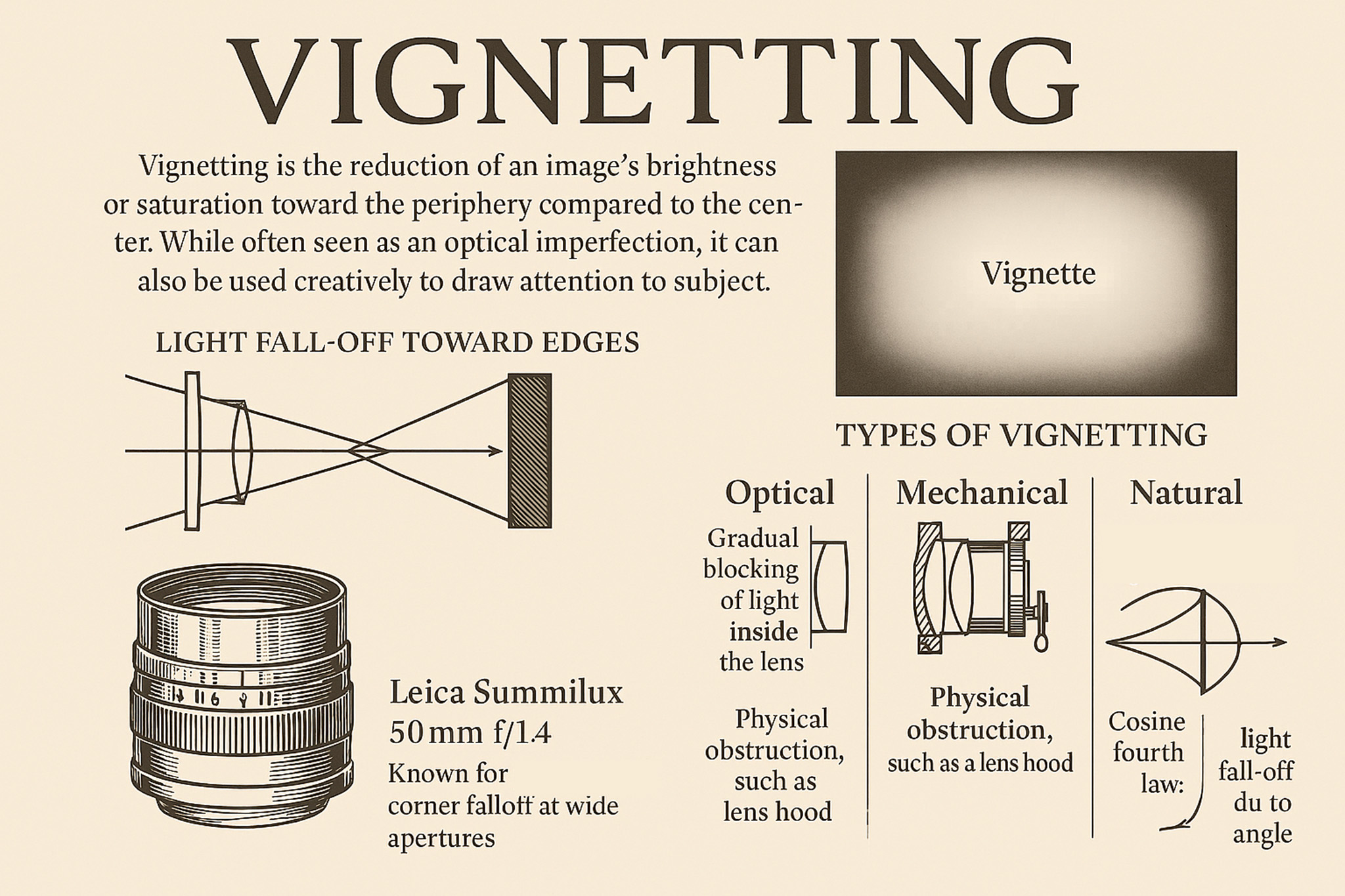
Which Lenses Show Vignetting Most?
- Wide-Angle Lenses: Capture extreme angles, leading to strong falloff.
- Fast Aperture Primes: At f/1.4 or f/2, corners darken noticeably.
- Vintage Lenses: Early designs lacked corrective elements, making vignetting part of their character.
- Zoom Lenses: Especially at their widest focal lengths.
Historical Context
In the 19th century, vignetting was not only tolerated but celebrated. Early portrait photographers used it to isolate subjects against softly fading backgrounds. Pictorialists in the early 20th century embraced imperfections like vignetting to mimic the aesthetics of painting.
By the mid-20th century, lens makers considered vignetting a flaw and worked to eliminate it. Today, digital photography has revived its artistic use—many photographers add vignettes in post-processing to create mood or direct attention.
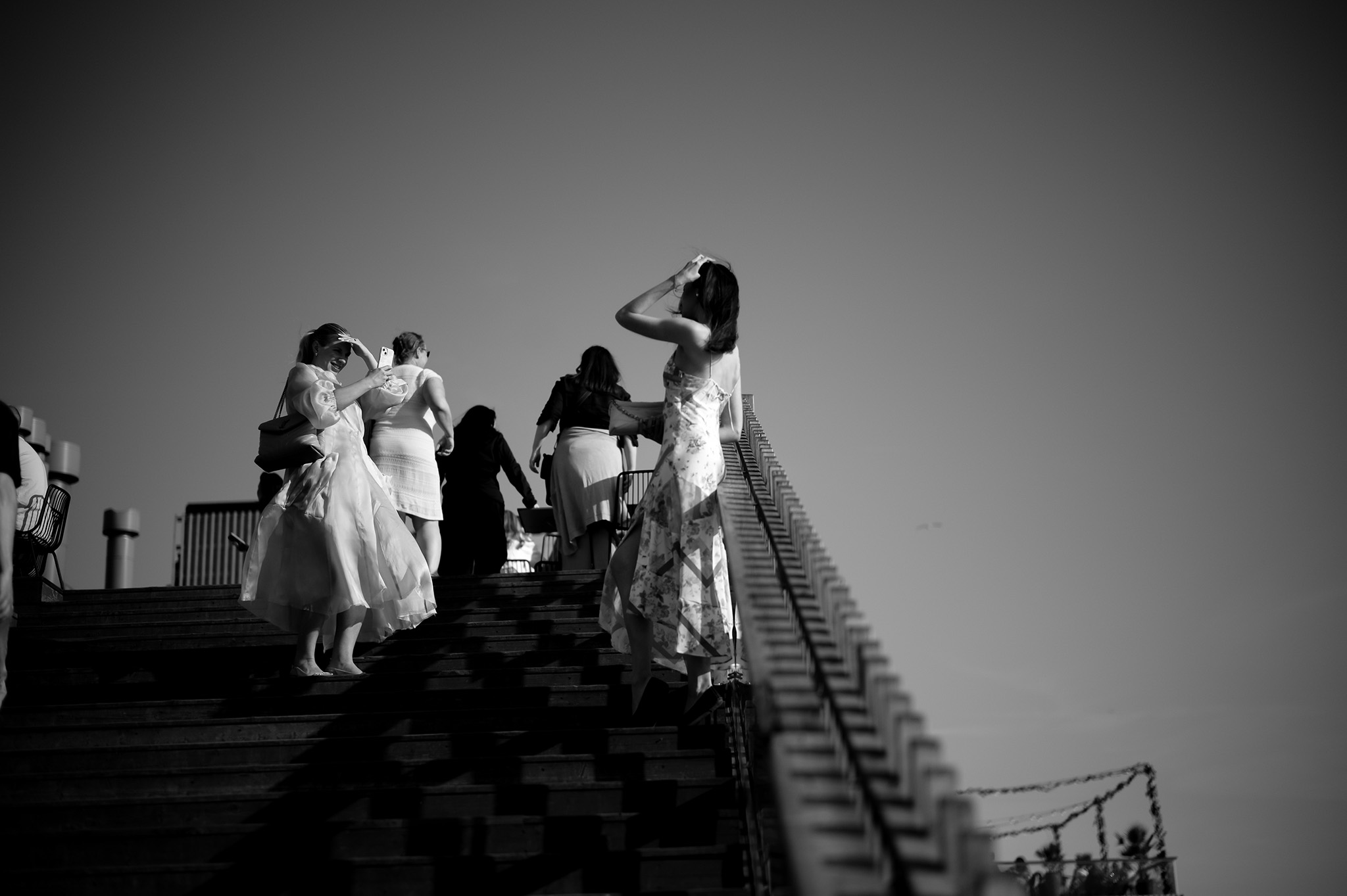
On this photo from Helsinki, Finland, the vignetting is clear up against the blue background, captured with Summilux 50mm f1.4 ASPH wide open, making the vignetting stronger, than if stopped down to 5,6 for example.
Is Vignetting a Concept or a Flaw?
Technically, it’s an optical imperfection. Conceptually, it can be, if you like it, a compositional tool:
- Directs the eye to the subject.
- Adds intimacy and nostalgia.
- Creates cinematic depth.
Practical Tips
- To Reduce Vignetting: Stop down the aperture, use high-quality lenses, and avoid stacking filters.
- To Embrace It: Add vignettes in editing software, use vintage lenses for character.
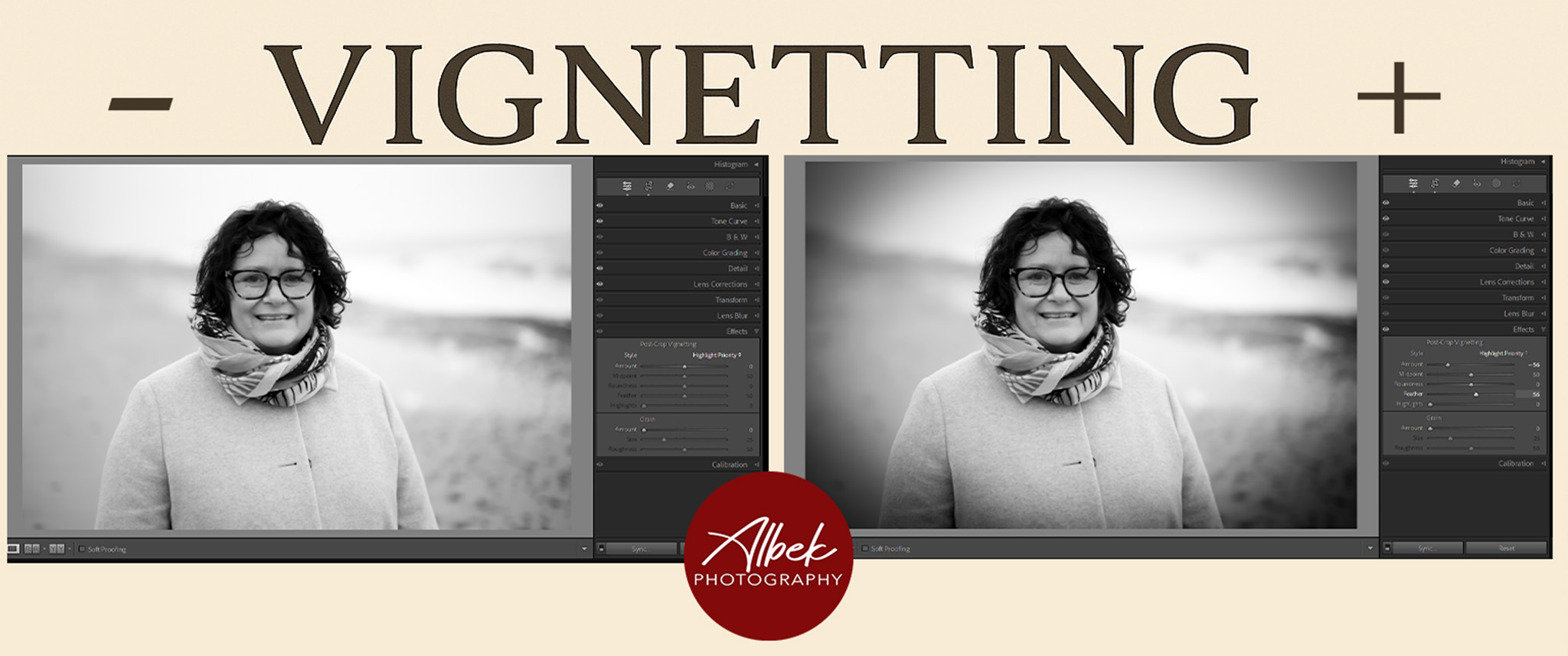 In this graphic the vignetting effect is added in Lightroom Classic, seen at the photo placed at the right.
On the original image (Leica Summilux 50mm f1.4 ASPH) only a slight vignetting is visible.
Vignetting is a fascinating blend of physics, design, and aesthetics. From early photographic history to modern digital artistry, it reminds us that imperfections often become defining features of visual storytelling, if we like that style. It’s all individual approach and taste.

The vignetting is clearest in the bottom darker corners, than it will be in dark or very bright areas, depending on the angle and lens type.
Share this:

Discover more from Morten Albek Photo Workshops
Subscribe to get the latest posts sent to your email.

