

Vintage Soul, Modern Eye: The Nikkor 55mm f/1.2 on the Sony A7R IV
There’s something magical about pairing old lenses with modern digital cameras. It’s not just nostalgia—it’s a dialogue between eras. Recently, I mounted the legendary Nikkor 55mm f/1.2, a lens born in the film age, onto the Sony A7R IV, a 61-megapixel powerhouse. The result? A fascinating blend of character and clarity, softness and vintage colours.
Why the Nikkor 55mm f/1.2?
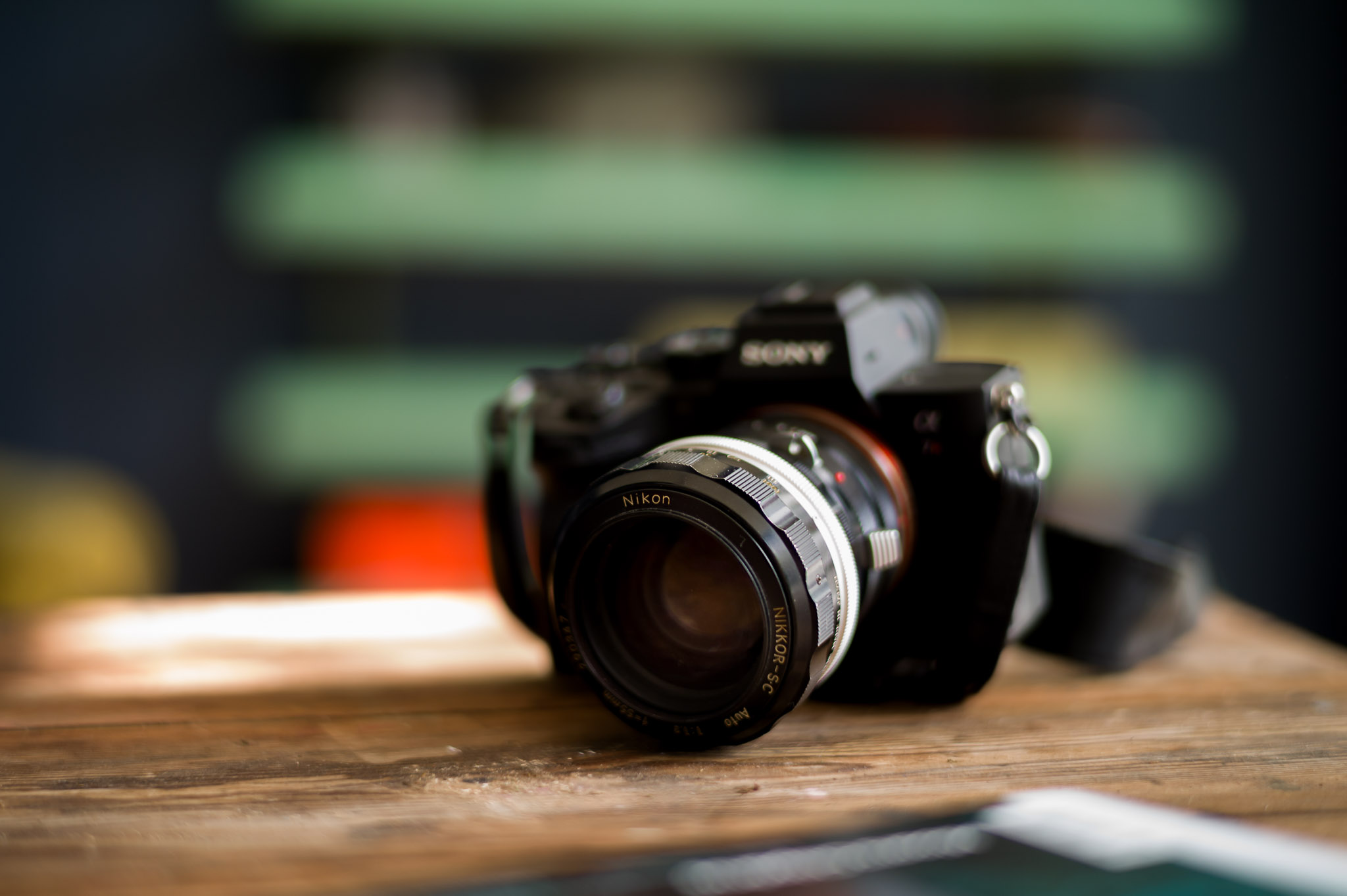
This lens is a classic for a reason. Introduced in the early 1970s, it was Nikon’s answer to ultra-fast standard primes. Wide open at f/1.2, it delivers a dreamy softness and swirling bokeh that modern lenses often try to correct. But that imperfection is precisely what gives it soul.
Old Glass, New Eyes: How Vintage Lenses Behave on Modern High-Megapixel Cameras
Pairing vintage lenses with modern digital cameras is more than a nostalgic exercise—it’s a creative choice that can yield stunning, character-rich images. But when these old lenses meet today’s ultra-high-resolution sensors, like the 61MP Sony A7R IV, the results can be both revealing and challenging.
Take the Nikkor 55mm f/1.2, a lens born in the film era. On the A7R IV, it becomes a storyteller with a new voice—one that speaks in incredible detail, but also exposes every nuance of its optical design.

The Resolution Challenge
Modern sensors are unforgiving. With 60+ megapixels, they resolve fine detail that older lenses were never designed to deliver. This means:
- Lens imperfections become visible: Chromatic aberrations, spherical aberrations, and softness in the corners are more pronounced.
- Wide-open flaws are magnified: Shooting at f/1.2 reveals dreamy bokeh and glow, but also softness and fringing that were once masked by film grain or lower-resolution sensors.
- Micro-contrast matters: Vintage lenses often have lower micro-contrast compared to modern optics, which can make images appear less crisp, especially in fine textures.
See The Beauty in the Imperfection
Despite these technical limitations,—or perhaps because of them—old lenses bring a unique aesthetic that modern lenses often lack:
- Organic rendering: The Nikkor 55mm f/1.2 has a painterly quality wide open, with a gentle falloff and a cinematic feel that’s hard to replicate.
- Character over clinical sharpness: Where modern lenses aim for perfection, vintage glass offers mood, atmosphere, and emotion.
- Color rendition: Older coatings and glass formulas can produce warmer, more nuanced tones, especially in natural light.

Why It Works (and When It Doesn’t)
Using vintage lenses on high-resolution bodies is a balancing act. You gain expressive qualities, but you also need to manage expectations:
- Stop down for sharpness: At f/2.8 or f/4, many vintage lenses sharpen up considerably, making them more suitable for detailed work.
- Use for artistic intent: Portraits, street scenes, and low-light environments benefit from the softness and glow of old lenses. You have to nail focus when shooting full open and have a fast shutter speed selected.
- Avoid pixel-peeping: If your goal is technical perfection, vintage lenses may frustrate. But if you’re chasing emotion and atmosphere, there is a lot of fun with this.
Conclusion
The Nikkor 55mm f/1.2 on the Sony A7R IV is a perfect example of how old lenses can thrive in the digital age—not by competing with modern optics, but by offering something different. They remind us that photography isn’t just about resolution—it’s about expression and sometimes imperfection creates something that’s magical.

Share this:

Discover more from Morten Albek Photo Workshops
Subscribe to get the latest posts sent to your email.


2 Comments
Gary Goldsmith
Bravo!
MortenAlbek
Thanks Gary ✔️ Fun to work with this old glass.